

 Image 1 of 1
Most of us assume that if the evidence were strong enough, believing would be simple. We wait for the answered prayer, the argument we cannot get around, the moment that settles it.
Scripture never treats belief that way.
Where Proof Ends is a Bible study on faith, doubt, and the limits of evidence, built on Hebrews 11 and drawing on John 20, Proverbs 3, John 9, and the call of Abraham. It begins with two men on a stage, one in a lab coat and one in a black suit, who argue for hours and end up shouting that apples are red and oranges are orange. The story is told by a man who was a staunch atheist until 2010, who was never convinced by an apologist's argument, and who came to faith anyway.
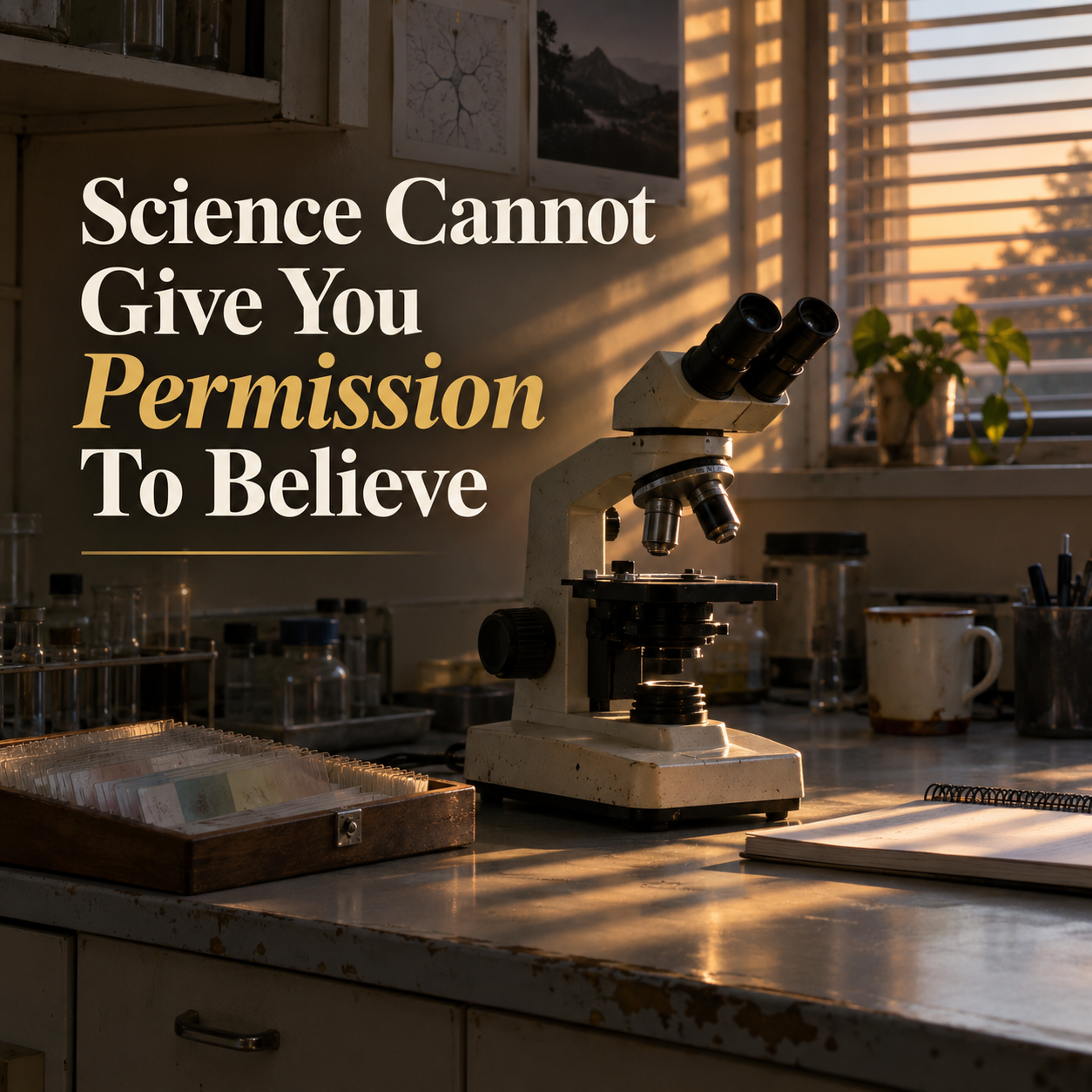
This study does not try to prove that God exists, and it will not hand you certainty. It argues that proving God is not what Scripture asks of us, and that a faith waiting for laboratory confirmation is waiting for permission it was never meant to need.
This study explores:
● why debates between scientists and apologists are not answering the same question
● the standard of evidence you carry without ever having stated it
● what Jesus said to Thomas after meeting the exact conditions Thomas set
● why you already act on trust in nearly every other part of your life
● what it means to seek God diligently in a week when you feel nothing
● how the man born blind answered trained men without arguing with them
● why Abraham went out not knowing where he was going
● the difference between honest questions and a refusal to decide
This Bible study kit includes:
● a complete printable Bible study
● Scripture-based teaching centered on Hebrews 11
● a personal narrative on atheism, doubt, and coming to faith
● reflection and group discussion questions
● practical application exercises
● a closing prayer
● PowerPoint teaching slides
● printable PDFs of the study and presentation
Best for:
● personal Bible study
● small groups and Sunday school
● discipleship and mentoring
● believers carrying doubts they have not said out loud
● seekers who have never been convinced by an argument
● apologetics, campus, and men's ministry settings
Estimated study time: 60-90 minutes for group study or 30-45 minutes for personal study.
Most of us assume that if the evidence were strong enough, believing would be simple. We wait for the answered prayer, the argument we cannot get around, the moment that settles it.
Scripture never treats belief that way.
Where Proof Ends is a Bible study on faith, doubt, and the limits of evidence, built on Hebrews 11 and drawing on John 20, Proverbs 3, John 9, and the call of Abraham. It begins with two men on a stage, one in a lab coat and one in a black suit, who argue for hours and end up shouting that apples are red and oranges are orange. The story is told by a man who was a staunch atheist until 2010, who was never convinced by an apologist's argument, and who came to faith anyway.
This study does not try to prove that God exists, and it will not hand you certainty. It argues that proving God is not what Scripture asks of us, and that a faith waiting for laboratory confirmation is waiting for permission it was never meant to need.
This study explores:
● why debates between scientists and apologists are not answering the same question
● the standard of evidence you carry without ever having stated it
● what Jesus said to Thomas after meeting the exact conditions Thomas set
● why you already act on trust in nearly every other part of your life
● what it means to seek God diligently in a week when you feel nothing
● how the man born blind answered trained men without arguing with them
● why Abraham went out not knowing where he was going
● the difference between honest questions and a refusal to decide
This Bible study kit includes:
● a complete printable Bible study
● Scripture-based teaching centered on Hebrews 11
● a personal narrative on atheism, doubt, and coming to faith
● reflection and group discussion questions
● practical application exercises
● a closing prayer
● PowerPoint teaching slides
● printable PDFs of the study and presentation
Best for:
● personal Bible study
● small groups and Sunday school
● discipleship and mentoring
● believers carrying doubts they have not said out loud
● seekers who have never been convinced by an argument
● apologetics, campus, and men's ministry settings
Estimated study time: 60-90 minutes for group study or 30-45 minutes for personal study.